
Rangers Launch $75 Lower-Bowl Ticket Pass, Undercutting Prices Paid by Season Members
The New York Rangers have introduced a new monthly ticket subscription offering guaranteed lower-bowl seats for just $75 per game,…
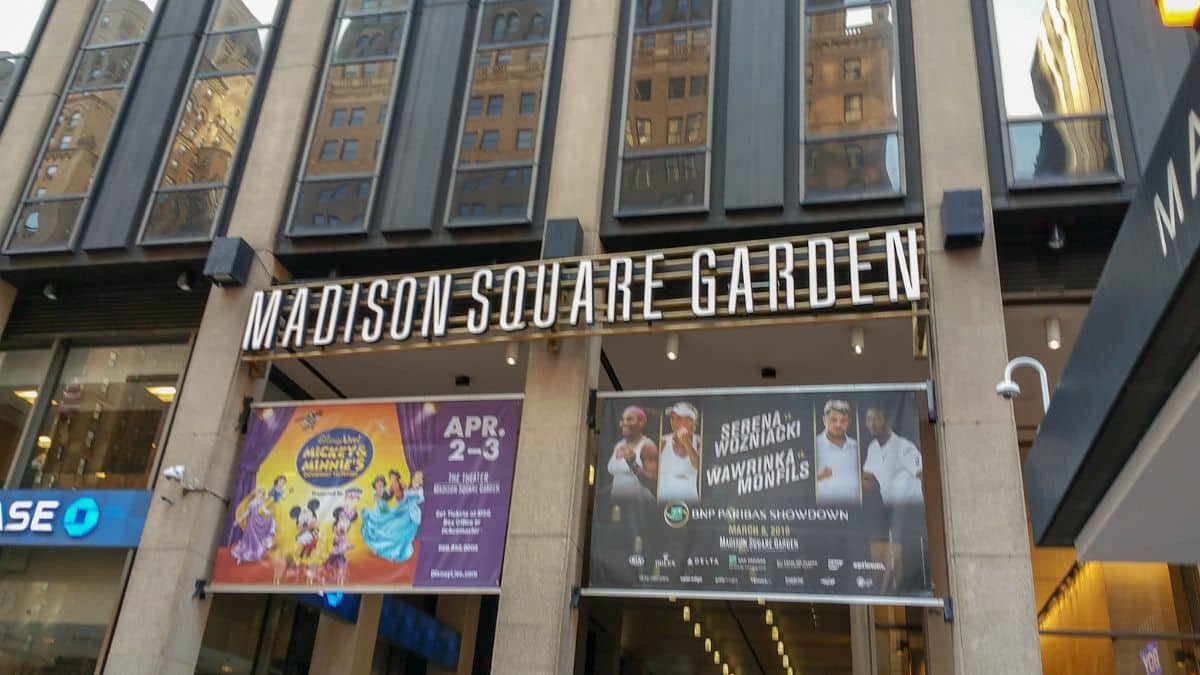
The New York Rangers have introduced a new monthly ticket subscription offering guaranteed lower-bowl seats for just $75 per game, drawing immediate complaints from season-ticket holders who say they committed to substantially more expensive plans for seats located higher in Madison Square Garden.
The new Rangers Pass costs $150 per month and includes two eligible Rangers home games each month during the 2026-27 regular season. Subscribers select from available games at the beginning of each month, with their exact lower-bowl seat assignments delivered four hours before puck drop.
The offer amounts to a fixed $75 ticket for lower-bowl inventory without requiring a full-, half- or quarter-season commitment. That price is proving particularly difficult to swallow for some existing Rangers members who say they are paying more per game despite committing thousands of dollars in advance.
One full-season holder reacting to the announcement said they were “paying more than that per ticket even for our cheapest tier seats in the 300s.” Another partial-plan holder said their seats in the 200 level cost roughly twice the new Rangers Pass rate.
Those comparisons are based on individual holders’ reported prices rather than a public Rangers membership pricing chart. The team’s current membership page lists full-season, 22-game half-season and 11-game quarter-season packages but does not publish a comprehensive per-seat price table.
Still, the reaction illustrates an awkward value proposition for a team asking its most committed customers to buy large blocks of games well in advance.
On the Rangers subreddit, one fan who had already purchased a quarter-season package called Rangers Pass “a really good deal” and said they wished it had been available before they bought their plan. Others similarly questioned why they should assume the cost and commitment of season tickets when a more flexible product now provides guaranteed lower-bowl access for $75 per game.
Rangers Pass Trades Certainty for a Much Smaller Commitment
The new pass does come with meaningful restrictions that distinguish it from conventional season tickets.
Passholders do not receive a fixed seat. They can choose only from games designated as eligible each month, with availability subject to capacity, and their seats are not assigned until four hours before the game. Playoff games are excluded.
Subscribers can cancel a selected game until approximately 24 hours before puck drop. The $150 subscription automatically renews each month, but holders can cancel the following month between the 15th and 25th. Buyers can hold as many as four passes on one account and can link separate accounts to request adjoining seats, subject to availability.
Traditional Rangers members receive benefits the pass does not replicate, including preferred seat locations, member presales, in-arena experiences and a 20% concession discount. Full-season buyers commit to 44 home dates including two preseason games, while half-season packages contain 22 games and quarter-season plans 11.
The Rangers also sell a separate Flex Plan designed for consumers who want to choose their own games and seats. Those plans use prepaid credits toward available tickets, with pricing ranging from face value to discounts of up to 10%, depending on the plan. Unused Flex Plan credit expires at the end of the regular season.
Rangers Pass is therefore not a complete substitute for a conventional membership. But the combination of a much shorter commitment, game choice and guaranteed lower-bowl location creates a particularly aggressive alternative for fans primarily concerned with attending games rather than maintaining the same seats or collecting membership benefits.
Cheap Inventory Does Not Necessarily Mean Weak Rangers Demand
The Rangers have not explained how much Rangers Pass inventory is available or why they chose the $75-per-game price.
The structure gives the team considerable control over how that inventory is distributed. The Rangers decide which games are eligible, while assigning the actual seats only hours before each game. That allows the club to use otherwise available lower-bowl inventory without promising subscribers particular sections or seats months in advance.
It would be premature to treat the promotion by itself as evidence that Rangers ticket demand has collapsed.
Madison Square Garden Sports Corp. told investors last month that fiscal 2026 featured “robust consumer and corporate demand” for both the Rangers and Knicks.
But Rangers Pass does create a new price benchmark inside the building. A customer willing to accept late seat assignment and a restricted list of games can now obtain a lower-bowl ticket for $75, while some of the team’s most committed customers say their per-game cost is higher even in the upper levels.
That distinction goes directly to the traditional economics of season-ticket ownership. Buyers generally accept a larger upfront commitment, including less desirable opponents and dates, in exchange for favorable pricing, consistent seats and member benefits. When substantially cheaper inventory becomes available to consumers taking on considerably less commitment, that bargain can become harder to justify.
Resale Restriction Raises Separate New York Ticket-Law Question
Rangers Pass also includes an unusual ticket restriction.
The team says tickets obtained through the program may be transferred, but they “cannot be resold via secondary market platforms or similar means.”
TicketNews asked MSG Sports to explain the legal basis for that restriction but did not receive a response before publication.
New York’s current ticketing statute contains a specific exception for a “professional sports organization membership pass” that bears striking similarities to Rangers Pass. Section 25.12 permits qualifying sports teams to sell discounted membership passes with variable seats assigned no more than four hours before an event and to restrict those tickets from being transferred or resold.
There is one conspicuous difference: the existing statute applies only to membership passes at venues with a fixed capacity of more than 30,000 seats. MSG itself lists Madison Square Garden’s capacity at 19,500.
New York lawmakers have proposed lowering that statutory threshold from 30,000 to 13,500, which would bring Madison Square Garden within the membership-pass provision. But that proposed change has not become law. The Senate bill remains in the Investigations and Government Operations Committee, with its most recent listed action coming in January.
Section 25.30 of the current law separately limits an entertainment operator’s ability to restrict resale of subscription or season-ticket packages and contains broader requirements governing transferable paperless tickets. Exactly how those provisions apply to the newly created Rangers Pass — which the team allows holders to transfer but prohibits them from reselling through secondary marketplaces — is not clear from the program terms alone.
TicketNews asked the Rangers whether the team considers Rangers Pass covered by Section 25.12 or another provision of New York law and how the secondary-market restriction complies with the existing statute. MSG Sports did not respond.
MSG’s Latest Ticket-Pricing Flashpoint
The reaction also comes two years after TicketNews reported Rangers and Knicks fans objecting to high primary-market prices offered through MSG Sports’ “Fan First” program. Fans at the time complained that tickets marketed as an alternative to inflated resale prices were themselves being sold at expensive face values.
MSG Sports encountered another pricing controversy just last week when the Knicks halted individual-game sales after some Fan First prices climbed above $1,000. The company acknowledged a pricing mistake and said affected customers would receive refunds for the difference after prices were reset.
Rangers Pass presents almost the inverse problem.
Instead of fans objecting that primary tickets are prohibitively expensive, the team has introduced a product attractive enough that existing members are questioning why their larger financial commitments did not buy them a better price.
For consumers willing to accept a rotating seat, limited game availability, late delivery and restrictions on resale, $75 lower-bowl Rangers tickets represent an unusually inexpensive way into Madison Square Garden. The unresolved question is how the team intends to preserve the value of its traditional membership products when some of its most loyal customers say the new alternative costs considerably less.
Read next
More headlines

Sep 23, 2026
Lionel Richie Postpones Remaining Earth, Wind & Fire Tour Dates
Lionel Richie has postponed three upcoming concerts with Earth, Wind & Fire as he takes time away from touring following…

Sep 23, 2026
Marc Anthony Las Vegas tickets on sale at BleauLive Theater
Marc Anthony will return to Las Vegas for nine performances at BleauLive Theater at Fontainebleau Las Vegas in 2027. The…
Sep 23, 2026
Ali Wong Chicago tickets on sale at The Chicago Theatre
Ali Wong will bring her stand-up comedy to The Chicago Theatre in Chicago, Illinois, on Friday, March 19, 2027. The…