
Healey Doubles Down on Ticket Resale Price Cap in Massachusetts Supplemental Budget
Massachusetts Gov. Maura Healey has opened a second legislative path for sweeping ticket resale restrictions, placing her “Great Divide Act”…
Massachusetts Gov. Maura Healey has opened a second legislative path for sweeping ticket resale restrictions, placing her “Great Divide Act” into the state’s fiscal 2026 closeout supplemental budget while lawmakers continue negotiating a different version of the policy already passed by the state Senate.
Healey filed H.5679 on Sept. 23. Section 27 would generally cap resale prices for non-sporting live events at 110% of the original ticket price, prohibit speculative ticket listings and impose a 10% cap on charges for listing tickets or providing a resale marketplace. The bill was referred to the House Committee on Ways and Means on Sept. 24, with no subsequent action posted as of Friday.
The renewed push comes amid a broader live-entertainment campaign to restrict ticket resale prices. Live Nation and Ticketmaster have repeatedly advocated for resale price caps and greater artist control over secondary sales, while the Massachusetts proposal has drawn organized support from artist, management and venue groups including the Music Artists Coalition, National Independent Talent Organization and Future of Music Coalition, along with more than 40 artists with New England ties, including Noah Kahan, Dropkick Murphys and Aimee Mann.
When Healey originally unveiled the Great Divide Act in July, a Live Nation spokesperson told the Boston Globe that the company supported efforts to cap resale prices, although the company did not specifically endorse Healey’s legislation.
Critics of resale price controls argue the policy would regulate prices only after the original ticket has been sold, while leaving primary-market dynamic pricing and most primary-market fees untouched. They also contend that such price controls are regularly shown to reduce inventory available through regulated resale marketplaces, push transactions toward private or social-media channels with fewer consumer protections and strengthen the position of primary ticketing companies or authorized resale channels.
Those competing interests are particularly notable in Massachusetts, where Attorney General Andrea Campbell has separately pursued Live Nation and Ticketmaster over their market power. A federal jury in April found Live Nation liable under state and federal antitrust law, although Live Nation continues to challenge the verdict and related remedies remain unresolved.
“Sadly, Governor Healey did it again, she is once again turning a blind eye to the illegal Live Nation-Ticketmaster box office monopoly which controls about 90 percent of all ticket sales in Massachusetts,” says Brian Berry of the Ticket Policy Forum in a statement shared with TicketNews. “If her supplemental budget bill is enacted, the Ticketmaster monopoly will remain free to continue to jack up ticket prices and gouge Massachusetts fans.”
A second version of the proposed regulations remain part of the Senate position in negotiations over the state’s broader economic-development legislation. The House rejected the Senate amendment to H.5576 on July 30, and a six-member House-Senate conference committee was appointed to reconcile the differences between H.5576 and the Senate’s S.3228. The bill docket still shows the measure in conference.
Healey herself acknowledged the parallel process in the letter accompanying H.5679, writing that “similar language” is being considered as part of the Mass Wins economic-development legislation and urging lawmakers to enact the ticket provisions quickly.
Two Versions Would Set Different Ticket Rules
At their core, both proposals would generally prohibit tickets covered by the law from being resold for more than 110% of their original price, while exempting sporting-event tickets from that price ceiling. Both also prohibit speculative listings for tickets a ticket business does not possess or have under contract to receive and restrict misleading claims about marketplace affiliation and ticket availability.
But the similarities end well short of identical legislation.
Most notably, Healey’s H.5679 includes a separate provision barring a ticket business from charging more than 10% of the ticket’s listed price for listing it for resale or providing a resale marketplace. The Senate-passed text contains no corresponding 10% marketplace fee limit.
That means a fee restriction absent from the final Senate version is now again before lawmakers through the governor’s supplemental budget.
There is also a potentially significant difference in how the two versions establish the benchmark for the 110% cap.
The Senate language specifically defines the “original ticket price” as the price at which a ticket was first sold to the public, including primary-market service charges, fees and surcharges but excluding taxes. It then says the resale price, exclusive of secondary service charges, fees or surcharges, cannot exceed 110% of that amount.
Healey’s Section 27 contains no equivalent definition. It says only that a ticket may not be resold for more than 110% of “the price of the original ticket” and separately establishes the 10% marketplace fee cap. In her transmittal letter, Healey describes the benchmark as the ticket’s “face value,” terminology that does not appear in the operative price-cap language.
That leaves questions about whether mandatory primary-market fees are included in the governor’s 110% calculation, whether the separate marketplace charge may be added on top of that ceiling and how an independent resale marketplace would verify an authoritative original price when tickets for the same event may have initially sold at different prices.
The bills also differ in who can authorize resale above the cap.
Healey’s version permits above-cap resale where a ticket is covered by a written contract with the ticket issuer allowing it. The Senate version instead requires explicit written permission from both the entertainer and venue. Section 27 does not separately define “ticket issuer.”
Another difference could matter particularly to smaller venues. The Senate version excludes live events at fixed locations with capacities of 1,000 or fewer people from its definition of a covered “live event.” Healey’s version contains no comparable venue-capacity exemption.
The Senate package additionally makes several changes to Massachusetts’ existing ticket-reseller licensing laws that are not included in H.5679’s Great Divide section. Its enforcement language also differs: the Senate text declares violations unfair or deceptive practices under Chapter 93A, while Healey’s version expressly authorizes the Attorney General to bring a Chapter 93A action to remedy violations.
Resale Industry Renews Opposition
The governor’s filing has also renewed opposition from businesses that would be directly affected by the proposed restrictions.
Ticket Policy Forum, a 501(c)(6) advocacy coalition whose members include StubHub, SeatGeek, Vivid Seats, TickPick, Gametime and Events Ticket Center, has emerged as one of the proposal’s most vocal opponents.
Brian Berry, Ticket Policy Forum’s executive director, criticized the supplemental-budget language as a resale-only approach that leaves Ticketmaster’s primary-market pricing outside the proposed ceiling. Berry also argued that limiting transactions through established resale platforms could push some sales toward less-regulated social-media and person-to-person channels.
“The resale market often offers fans better deals than Ticketmaster,” Berry said in a statement Wednesday, pointing specifically to BTS’ August concerts at Gillette Stadium. “When you push legitimate ticketing companies like our members out of the market, these options to save big disappear. Ticketmaster will be the only option left standing.”
That example is one TicketNews documented in real time.
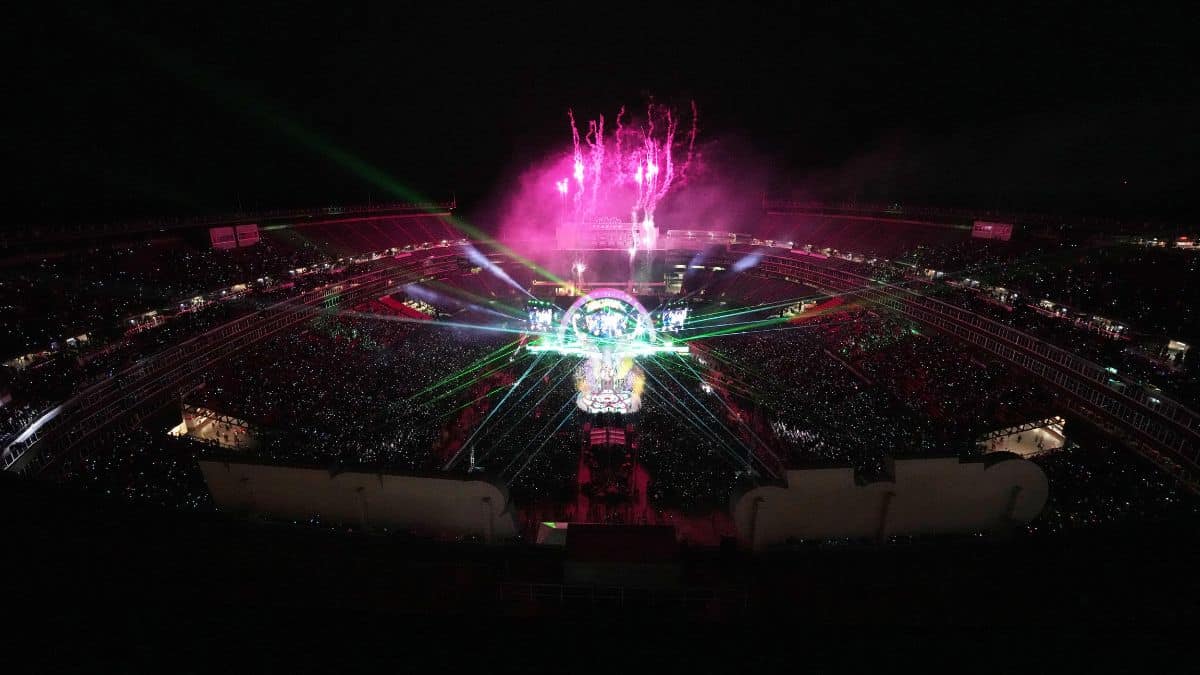
Hours before BTS’ Aug. 5 concert in Foxborough, Ticketmaster’s least expensive visible primary ticket was $135.20 including fees. StubHub showed tickets beginning at $20 including fees, SeatGeek at $24 and Ticket Club member pricing as low as $16. No Ticketmaster Verified Resale inventory was visible at the time.
For the second Gillette show, Ticketmaster displayed a standard-admission ticket in Section 304, Row 19 for $98.95, while SeatGeek had a ticket one row away for approximately $36 including fees.
Berry cited the concerts as evidence that resale can function as a discount market when demand softens, although the Gillette example alone does not establish how a statewide cap would affect overall ticket availability, marketplace participation or off-platform transactions.
Ticket Policy Forum has an economic interest in the outcome: its members operate marketplaces whose resale transactions would be directly regulated by the proposal.
Healey Administration Asked to Clarify Differences
TicketNews sent the Governor’s Office questions Friday seeking clarification on several of the differences between H.5679 and the Senate legislation.
Among them, TicketNews asked why Healey included the 10% marketplace fee cap when the Senate-passed version does not; how the administration defines the “price of the original ticket”; whether primary-market fees are included in that calculation; and whether the separate 10% marketplace charge can be added to the maximum permitted resale price.
TicketNews also asked how the ticket-issuer exception would work in practice and whether a ticket issuer could authorize a particular resale channel to exceed the 110% limit while other marketplaces remained subject to the cap.
The administration was additionally asked which stakeholders it consulted in developing the ticketing provisions, including what input it sought from primary ticketing businesses, resale marketplaces, artists, venues, consumer organizations and other affected parties.
Finally, TicketNews asked whether Healey now considers H.5679 the preferred vehicle for the Great Divide Act or still wants lawmakers to preserve the Senate version through the economic-development conference process.
The Governor’s Office acknowledged receiving the questions but had not provided substantive responses by TicketNews’ publication deadline.
The administration has promoted the legislation as a consumer-affordability measure. Its Sept. 23 announcement said the supplemental budget would take action to lower costs for Massachusetts residents, including when buying concert and sports tickets. Section 27, however, specifically exempts sporting-event tickets from the 110% resale price ceiling; the separate 10% resale-marketplace fee restriction does not contain the same sports exemption.
Massachusetts lawmakers therefore are not simply deciding whether to enact one settled version of the Great Divide Act. One version is now before House Ways and Means while another remains part of an economic-development conference negotiation, with differences involving marketplace fees, small-venue coverage, calculation of original prices and who may authorize tickets to be resold above the proposed ceiling.
Read next
More headlines

Sep 25, 2026
Peachtree Entertainment Named Co-Owner, Operator of Lexington’s The Rail
Peachtree Entertainment has been named co-owner and exclusive operator of The Rail, a 2,200-capacity live music venue under development in…

Sep 25, 2026
National Harbor Sphere Labor Dispute Emerges as County Weighs $130M Funding Bill
A dispute over union labor has emerged as a potential obstacle for Sphere Entertainment’s planned $1.4 billion venue at National…

Sep 25, 2026
All Things Go NYC Canceled as Nor’easter Forces Third Major Weekend Cancellation
All Things Go has canceled its entire 2026 New York City festival at Forest Hills Stadium, making it the third…